22° 50′ N, 59° 14′ E
Overview
This post may contain affiliate links, which means we may receive a small commission, at no extra cost to you, if you make a purchase through our link.
This is a free way to support us and allows us to continue creating even more inspiring travel guides. Thank you for supporting the love we put into Coordinotes!
Wadi Shab Trail
The full Wadi Shab hike is about 2.5 km each way, so 5 km return, with just 85 metres of elevation gain. It’s rated easy to moderate, and overall, that feels accurate. Most reasonably fit people will find it very manageable. It takes around 45 minutes to reach the first pool, depending on your pace and photo stops.
Wadi Shab boat
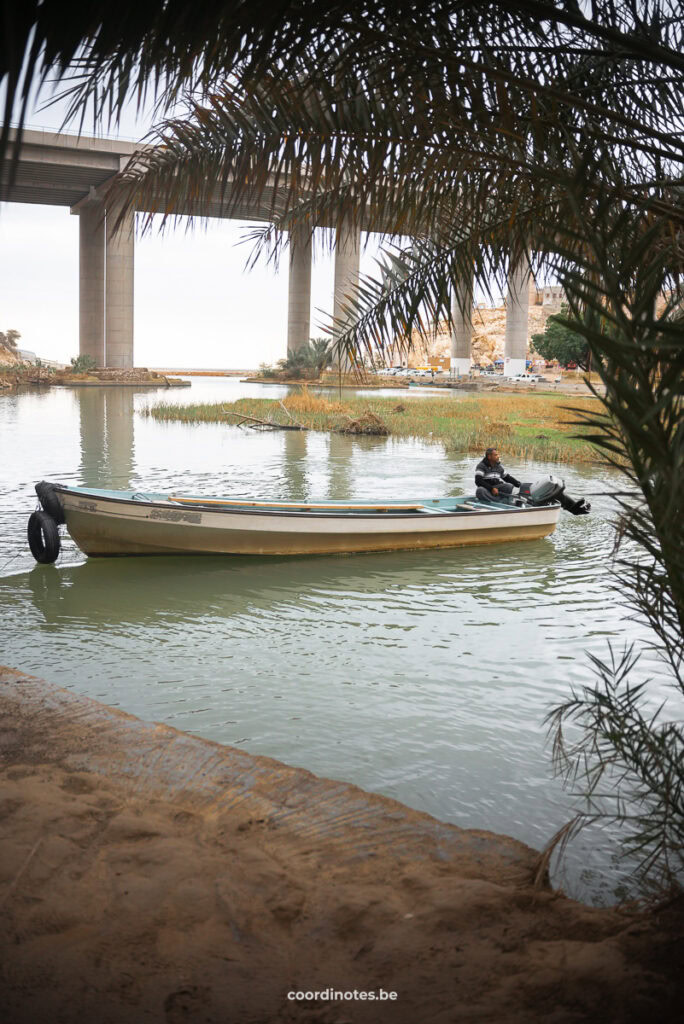
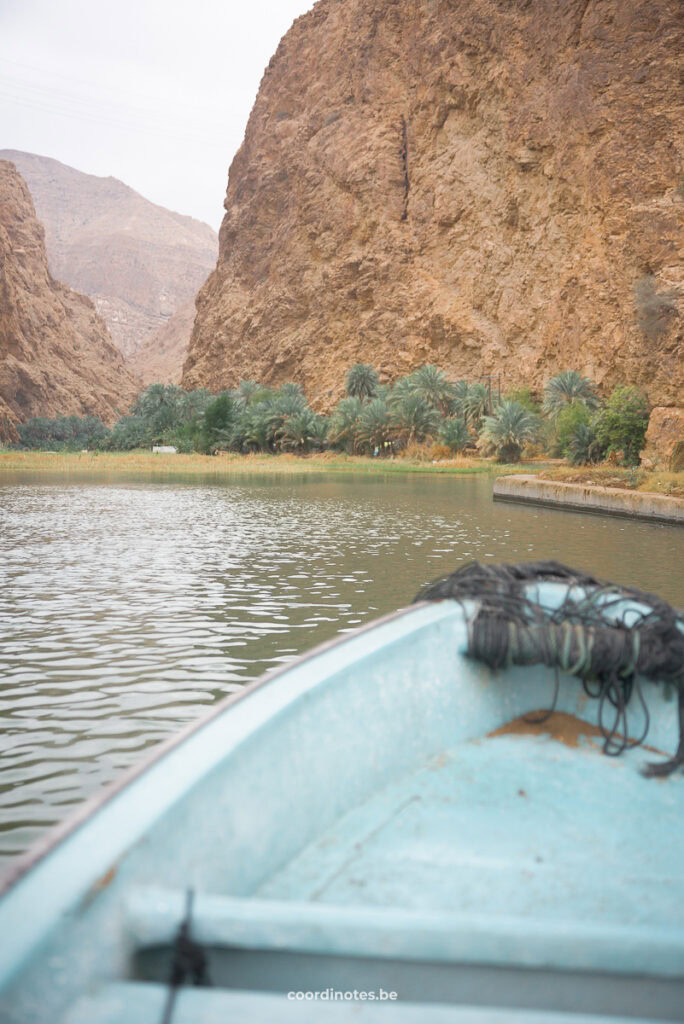
Before you even start walking, you’ll need to take a small boat across the river from the parking lot. The boat ride only takes a minute or two and usually costs around 1 OMR per person return (paid in cash). They usually run from 8 am to 5 pm. Once across, the hike begins.
Wadi Shab hike
Right at the beginning you pass a small café, your last chance for a drink or snack. After that, the trail leads you along the mostly dried up river bed.
The first kilometre is completely flat, but it does look a bit neglected. The ground is uneven, with sand, loose stones and dirt, and after rain there can be large puddles to navigate around. You pass small plantations and date palms, which makes this section feel slightly scruffy and less wild than you might expect at first. Stick with it though, because it improves the further you go. There’s really only one obvious direction here, so it’s easy to follow.
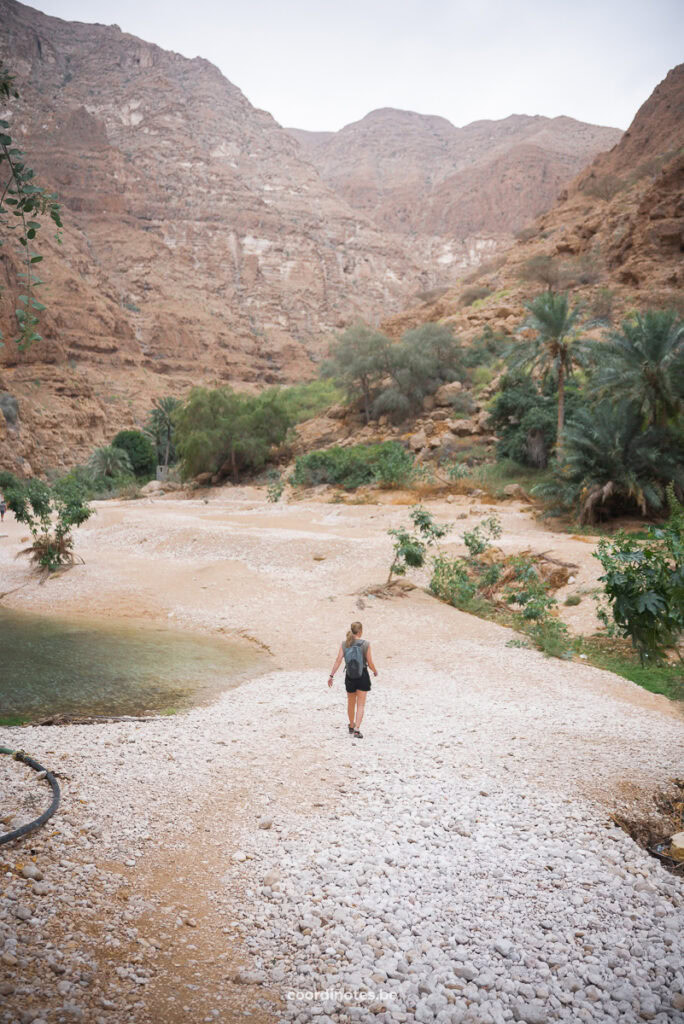
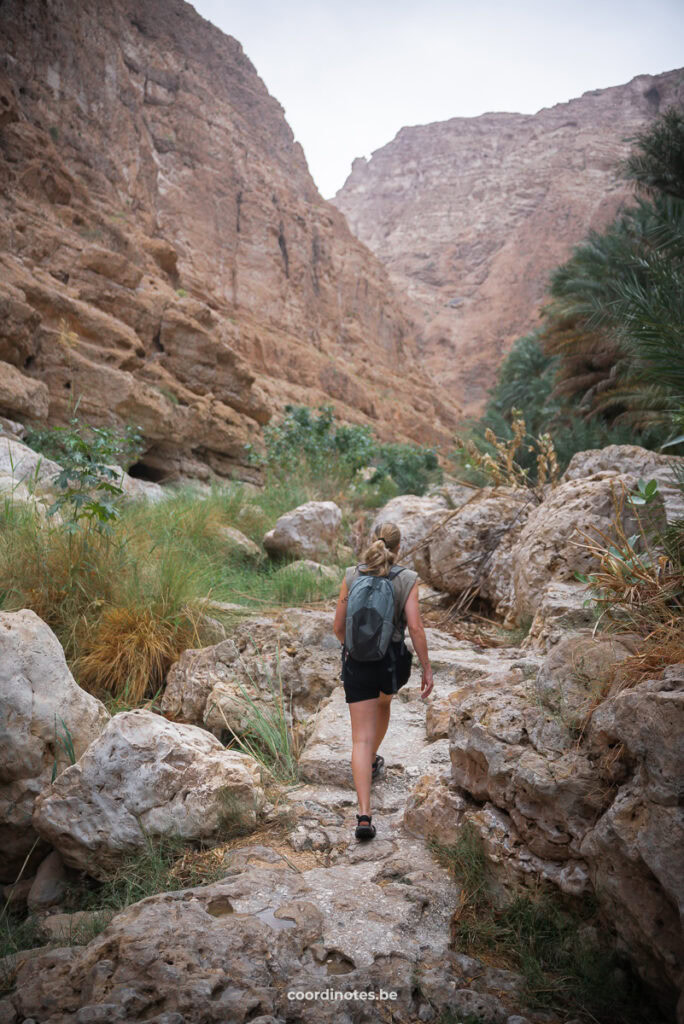
At one point it looks like the loose stone path continues straight into the water and that you’ll have to get your feet wet already. Instead, the correct trail turns right. It feels wrong, but that’s the way to go.
As you continue, the canyon starts to close in and the scenery becomes more dramatic. After just over 1 km, the path winds along the canyon walls and the views really open up. You’ll see bright turquoise pools below and smooth rock carved by years of flowing water. You’ll also notice large pipelines cutting through the landscape, which slightly interrupt the otherwise beautiful setting.
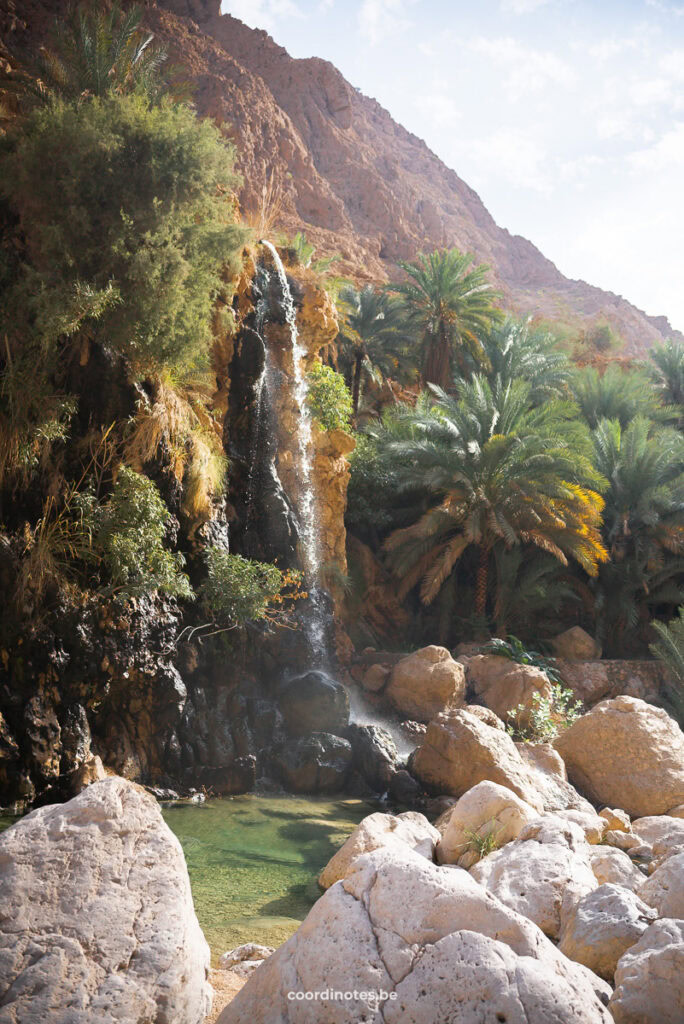

You follow the canyon wall for about 350 metres before crossing the wadi several times over rocks in the water. These can be slippery, so take your time.
After a few short stair sections, you reach the start of the rocky stretch. From here to the first pool is roughly 400 metres. This section involves some easy boulder hopping with flatter track in between. It’s not technical, but you do need to watch your footing. Painted arrows and coloured dashes mark the route, although they’re not always clear. We also saw signs pointing in different directions, some of them crossed out, so at times you simply pick the route that looks most logical.

Along the way you pass a small man made waterfall and sections of falaj, an old irrigation channel that you can follow briefly instead of scrambling over rocks. Shortly after, the canyon opens up again.
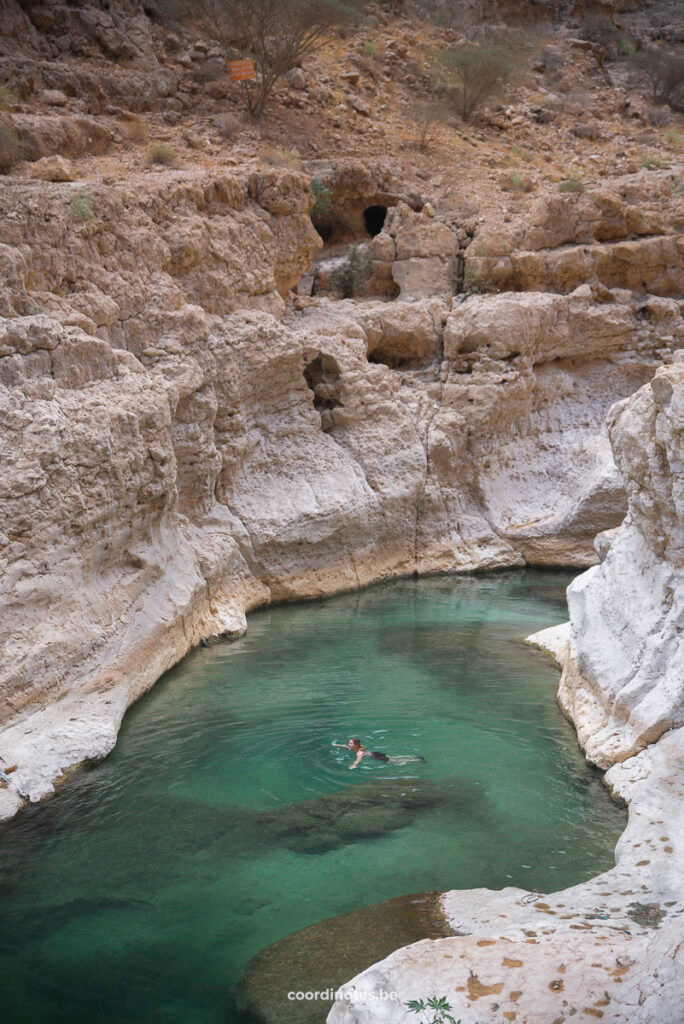
Keep following the path for about 100 meters and you’ll reach the first pool. You can enter the water here or continue a little further along the trail to the right to the last easy access point before the swimming section properly begins.
Swimming to the Wadi Shab Cave
The first pool
How easy it is to enter the water depends on where you get in.
If you step in near the earlier access points, you can usually walk straight into shallow water and wade for the first few metres before it becomes deep enough to swim. The entry here is relatively straightforward.
If you continue to the very last entry point before the swimming section properly begins, you’ll step into shallow water with a large slippery rock just beneath the surface. It creates a shallow shelf at first, but immediately after that rock the pool drops off and becomes deep enough that you have to swim. Take your time here, as the rock can be slick underfoot.

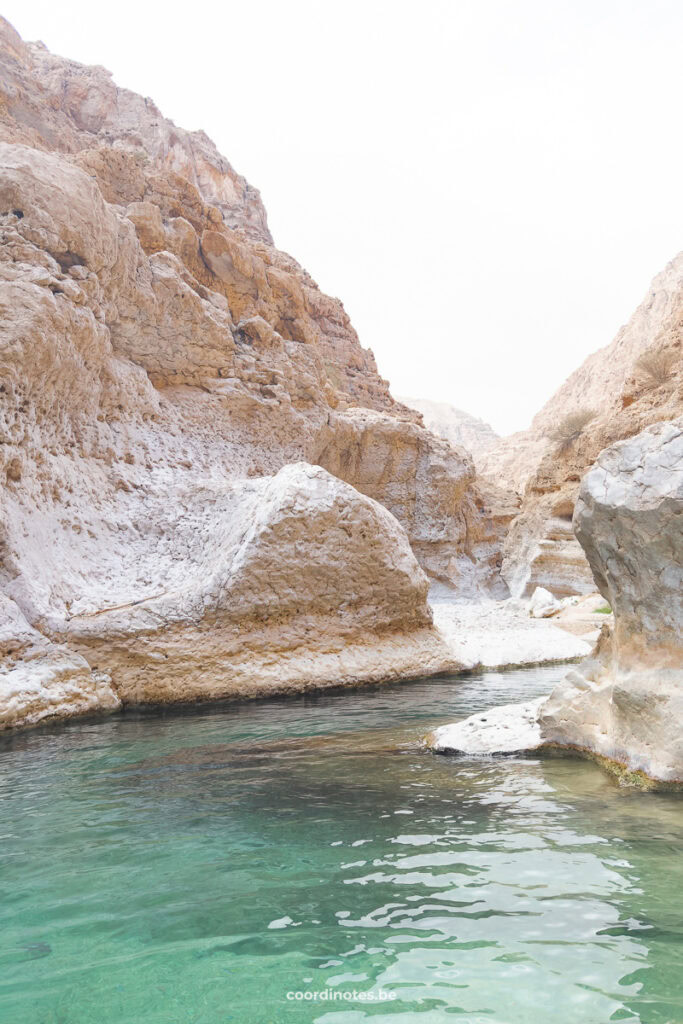
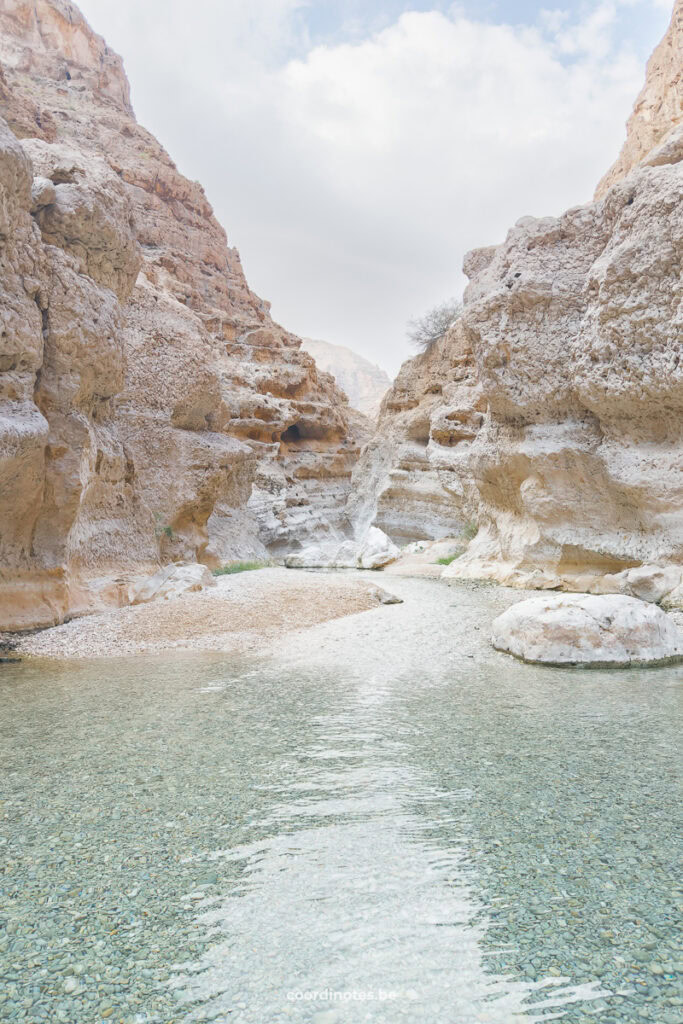
The shallow pebble stretch
After the first main swim, you reach a very shallow section where the water is only ankle deep. You can easily walk through it, but without water shoes it can be uncomfortable.
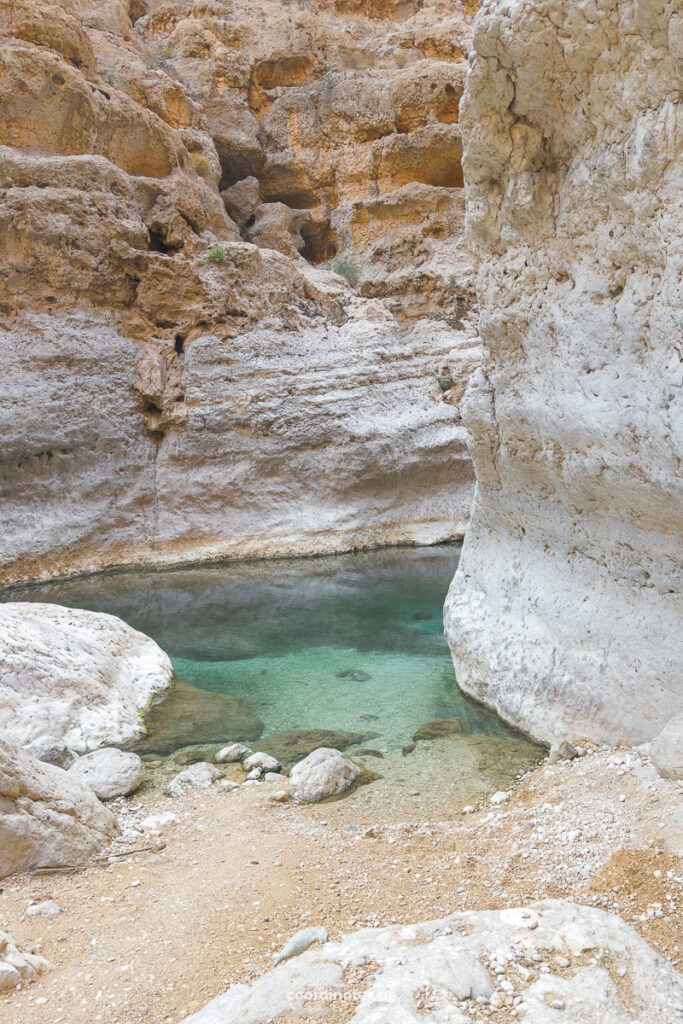
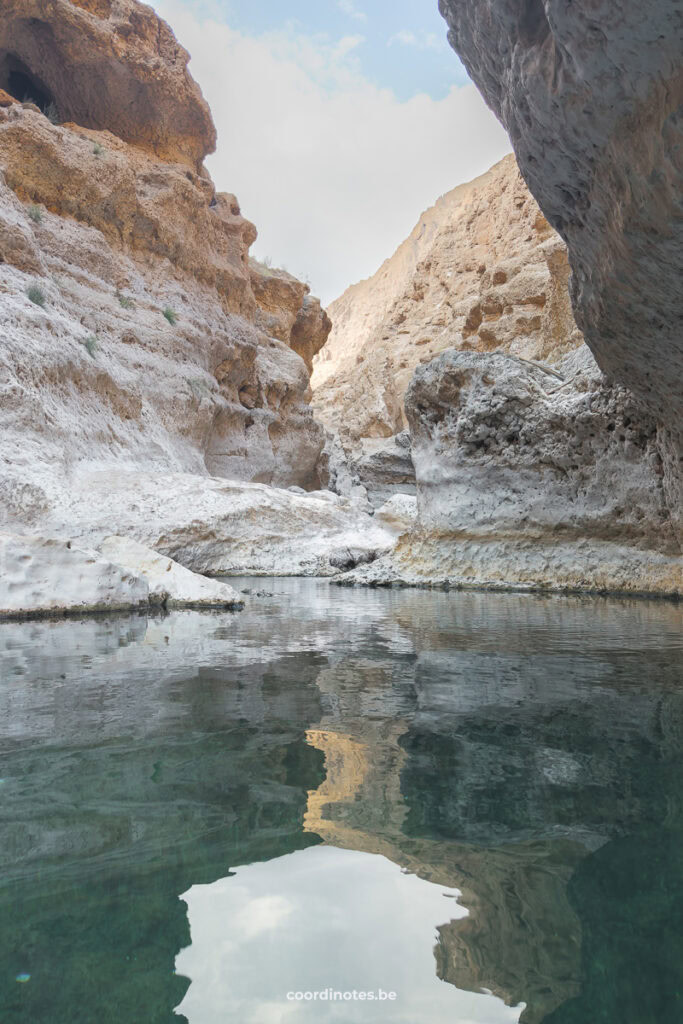
The middle pool
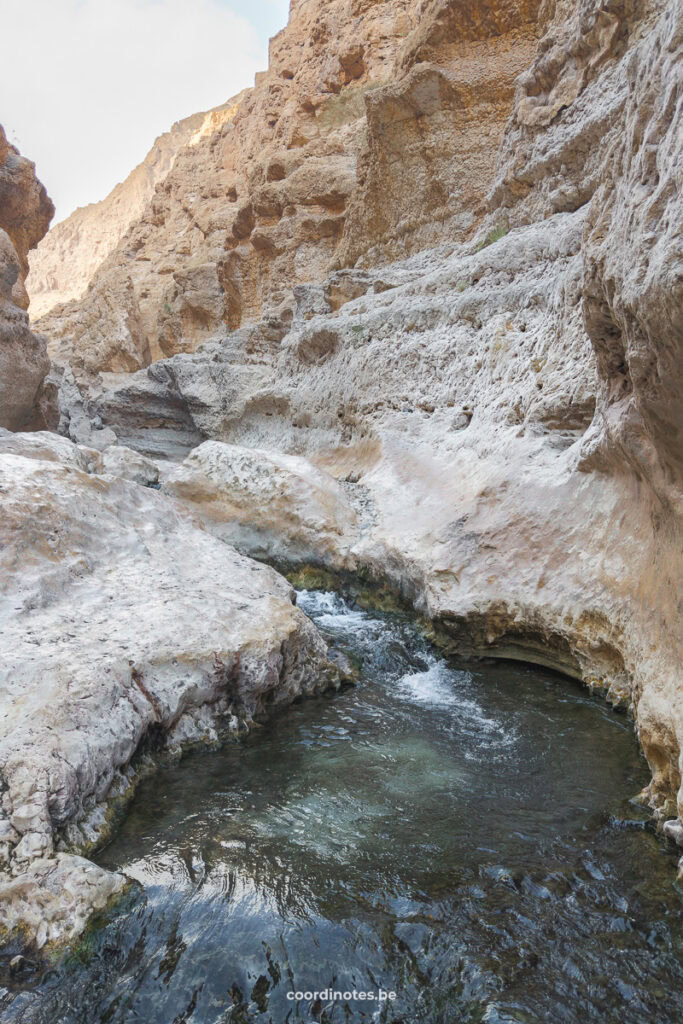
The water rapid
Next comes the trickiest section of the entire Wadi Shab swim. You’ll reach a small rapid flowing into a shallow pool, just before a rock shelf covered in moss. It’s extremely slippery. You need to carefully shuffle across the submerged rock and then climb up and over a low ledge into the next pool. Alternatively, you can try to pull yourself onto the drier rocks on the left side.
It’s not technically difficult, but the slick surface makes it very easy to lose your footing. We definitely slipped more than once here, so take it slow.
The third pool
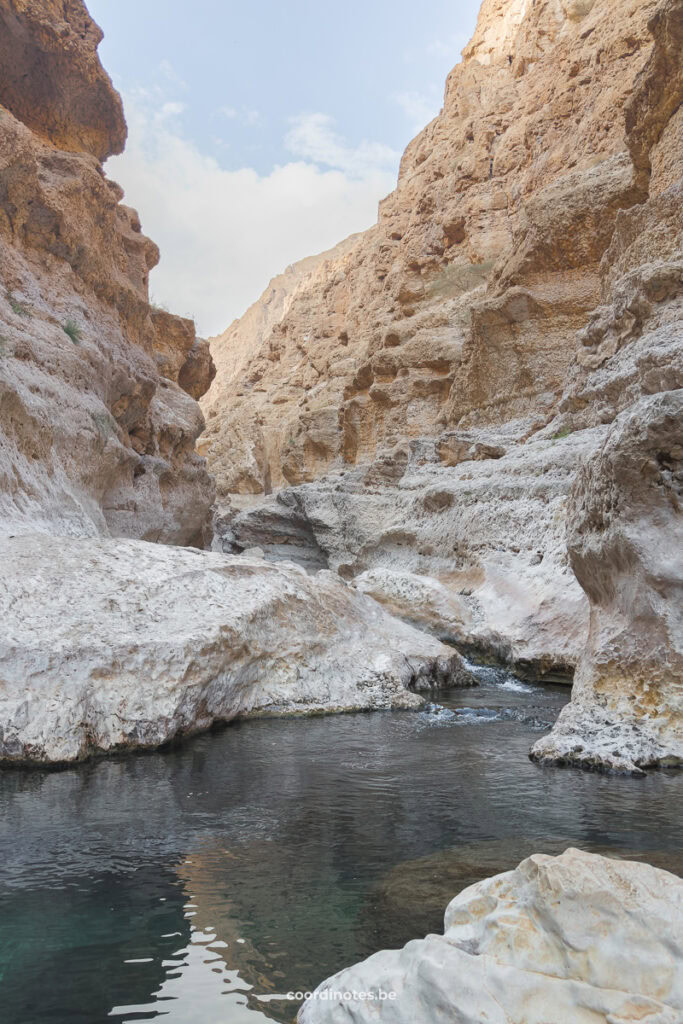
Once you’re past the slippery ledge, you enter the final long pool before the cave. This one is deeper and you’ll be swimming most of the way, roughly 20 to 30 meters. There’s no shallow ground here. Just a few metres before the cave entrance, there’s a large submerged rock where you can pause for a final rest before heading inside.
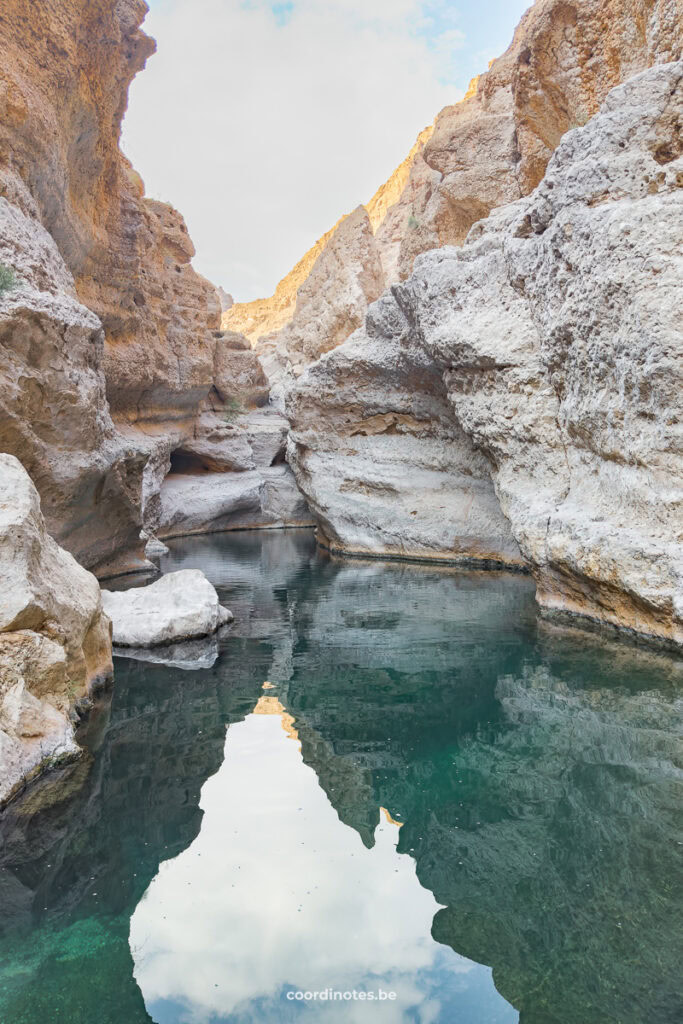
At the far end of the pool, you’ll notice a narrow crack in the canyon wall, often referred to as the keyhole. It doesn’t look like much at first glance, just a tight opening a few meters long.
To get through, you simply swim into the gap. You don’t need to put your head underwater, and you can move slowly while holding onto the rock on either side if that feels more comfortable. The opening is quite narrow though, so don’t be surprised if your shoulders brush the walls as you pass through when the water level is really high.

Inside the Wadi Shab cave
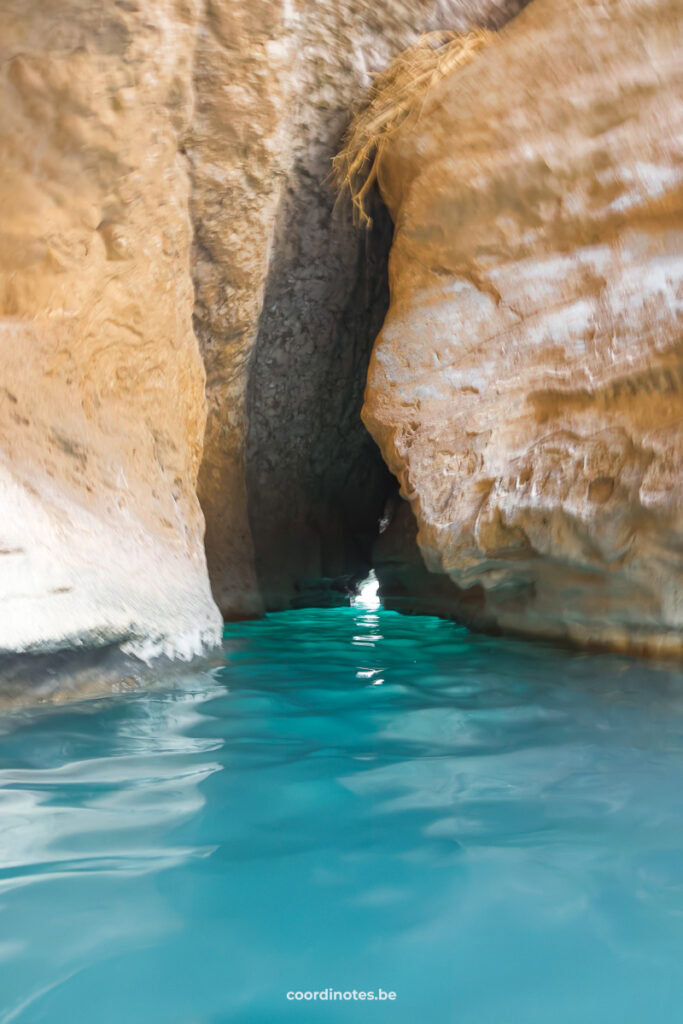
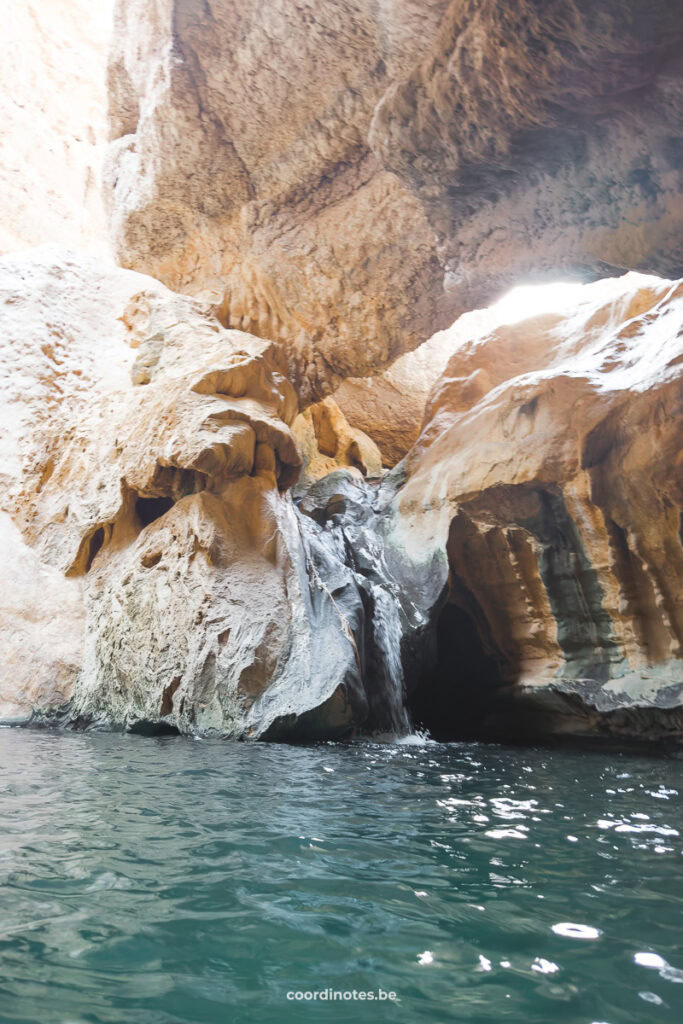
On the other side, you emerge into a large cave pool with a waterfall cascading down from above. The water inside is deep and there’s no proper place to stand unless you can pull yourself up onto the rocks along the edge, so most people tread water while taking it all in.
If you arrive early and there are only a handful of people, it feels incredibly special. The sound of the waterfall echoing off the cave walls and the light filtering in through the narrow opening make it feel almost hidden. We got there very early and had it nearly to ourselves, which made the experience even better. With big crowds inside the cave, we can imagine it loses a bit of that magic.
How to get to Wadi Shab
Wadi al Shab is located in northeastern Oman, along the coastal road between Muscat and Sur. It sits near the small village of Tiwi, just off Highway 17. From Muscat, it takes about one and a half hours to drive there, while from Sur it’s roughly 45 minutes.

The easiest way to reach Wadi Shab is by renting a car and driving yourself.
The drive is straightforward and on a well-maintained road, so you don’t need a 4WD vehicle. Once you arrive, you park near the river and take the short boat ride across to start the hike.
If you prefer not to drive, you can join a guided day tour from Muscat. Many tours combine Wadi Shab with other nearby highlights, which can be convenient.

Book your transport in Oman now!
Like it? Pin it!
Save this post on Pinterest!

Best time to visit Wadi Shab
Time of the year
Wadi Shab is open year round, but the most comfortable months are between October and April, when temperatures are much milder for hiking and swimming. The winter period, especially December to March, is also the busiest.
Rainfall plays a big role, because wadis can flood. We actually visited shortly after heavy rainfall and even had light rain on the drive there. The water level was higher than usual, but everything was still accessible and the cave could still be reached.
That said, you should never visit during heavy rain or if rain is forecast. Flash floods can happen quickly and are extremely dangerous in wadis. If there has been a lot of rain recently, it’s smart to check local conditions before heading out. Locals warned us that if it started to rain, we had to leave the wadi immediately.
Time of the day

What to bring to Wadi Shab
First of all, bring water shoes or sturdy sandals with grip. You’ll be walking on uneven ground, crossing slippery rocks and wading through shallow pebble sections.
A small dry bag is very useful if you want to take your phone with you into the pools and the cave. Otherwise, you’ll need to leave it on the rocks at the first pool. A waterproof phone pouch also works well.
Bring plenty of drinking water, especially if you’re visiting outside the winter months. There’s a small café at the start of the trail, but nothing once you’re inside the canyon.
Other useful items include sunscreen, sunglasses and a hat for the exposed sections of the hike. A lightweight towel can be nice for the walk back. If you’re not a strong swimmer, consider bringing or renting a life jacket, as the pools are deep and you’ll be treading water in the cave.
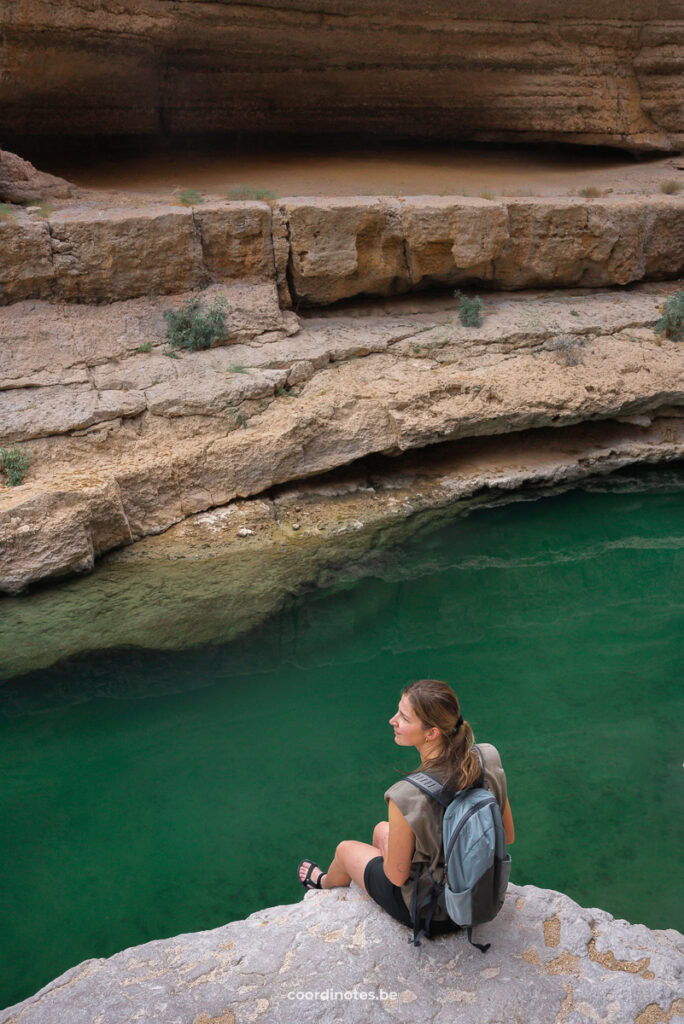
Lastly, pack light. You’ll either be carrying your things while swimming or leaving them behind at the first pool, so only bring what you really need.
Tips for beating the crowds
The best tip we can give to beat the crowds is to arrive as early as possible. Being at the entrance close to opening time makes a huge difference, especially if you want to enjoy the cave without lots of people around. Once you start hiking, keep a steady pace so you reach the pools before the main wave arrives.
Visit on a weekday if you can. Weekends and public holidays are much busier with both locals and tour groups.
Wadi Shab FAQ
What to wear to Wadi Shab
Wear lightweight clothes you’re comfortable swimming in. Many people hike in sportswear and swim in the same outfit. Oman is a relatively conservative country, so it’s respectful to avoid very revealing swimwear. Quick drying fabrics are ideal since you’ll be getting in and out of the water multiple times.
Do I need a guide
No, you don’t need a guide to visit Wadi Shab.
The trail is straightforward and easy to follow. The swimming route to the cave is also simple to navigate. You move from pool to pool until you reach the narrow keyhole entrance. There are no complicated turns or hidden paths.
Should I rent a life jacket
If you’re not a strong swimmer, you might want to rent a life vest at the entrance of the wadi before starting the hike. The pools are deep and you’ll be treading water inside the cave, so having extra support can make the experience much more relaxed.
Do I need to swim at Wadi Shab
Yes, swimming is required if you want to experience the full Wadi Shab hike and reach the cave.
After the hiking section, the trail continues through a series of natural pools. While some parts are shallow enough to wade, there are several deeper sections where you’ll need to swim. The final stretch to the cave is a proper swim, and the cave itself is deep with no place to stand unless you can pull yourself onto the rocks.
If you don’t want to swim, you can still enjoy the hike up to the first pool and relax there. The scenery along the trail is beautiful even without entering the water.
Where to stay at Wadi Shab
You can easily visit Wadi Shab as a day trip from Muscat, which is about 1,5 hours away. Sur is another good base, around 45 minutes from the wadi.
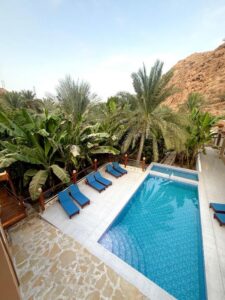
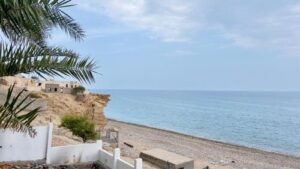
If you want to arrive early and avoid crowds, staying closer in Tiwi is the best option. Being just minutes from the entrance makes a big difference. One of the best options in Tiwi is Wadi Shab Guest House.
Hotels
Find the best places to stay before or after the Wadi Shab and enjoy a comfortable trip.


via Booking.com
Win-Win for everyone
Did you know that, if you buy or book something through our links, we receive a small commission?
However, you still pay the same and therefore have no extra costs! So a win-win for everyone. This way, we can continue to add even more travel inspiration and tips to this blog for your next adventure. Thanks a lot!
Thank you for visiting our blog
We hope you find our free travel guides and tips useful. If you want, you can support us virtually by ‘buying us a coffee‘.
Every contribution, no matter how small, is greatly appreciated and will help us continue to share our passion with you and grow this blog.
Win-Win for everyone
Did you know that, if you buy or book something through our links, we receive a small commission?
However, you still pay the same and therefore have no extra costs! So a win-win for everyone. This way, we can continue to add even more travel inspiration and tips to this blog for your next adventure. Thanks a lot!