
35° 21′ N, 138° 43′ E
Overview
This post may contain affiliate links, which means we may receive a small commission, at no extra cost to you, if you make a purchase through our link.
This is a free way to support us and allows us to continue creating even more inspiring travel guides. Thank you for supporting the love we put into Coordinotes!
Best time to visit Mount Fuji
Timing is everything when it comes to seeing Mount Fuji. The mountain is fully visible, including the summit, only about 20 to 30 percent of the year, so planning your visit wisely is key. For another 20 to 30 percent of the year, the mountain is only partially visible, with the summit obscured by clouds while the lower slopes remain in view. The rest of the time, roughly 30 percent of the year, Mount Fuji is completely hidden behind clouds or haze.
The best time to see Mt Fuji depends on the season and time of day, which can make all the difference in whether you get a clear view or just an outline in the mist.

Best time by month and season
Your best bet for clear views of Mount Fuji is in the winter months, from November to February. The air is crisp, the skies are clearer, and there’s less rain, which means fewer clouds blocking your Mount Fuji view. During these months, the iconic snow-capped peak is at its most beautiful.
Summer, on the other hand, tends to be hazy and rainy, making it the worst time for visibility. The combination of heat, humidity, and a higher chance of rain results in frequent cloud cover that often obscures the mountain.
So, if you’re hoping for that perfect snow-capped Fuji shot, aim for late December to early March. However, if your goal is to climb Mount Fuji rather than just see it, you’ll have to visit Mount Fuji in summer as the trails are closed in winter.
Best time of the day
If you want the clearest view of Mount Fuji, aim to see it in the early morning. The earlier, the better – so sunrise is the best time, as clouds tend to form as the day warms up, making the mountain disappear entirely by midday or afternoon. At the same time, sunrise is not only best for visibility, but watching the sun light up the summit in shades of purple and orange at sunrise is a magical experience that makes the early wake-up call well worth it.

Mount Fuji visibility predictions
Even if you visit during the best months and wake up at the crack of dawn, there’s still one more factor to consider: the weather. Keep an eye on both the general weather forecast and dedicated Mount Fuji visibility forecasts. Start checking about a week in advance and monitor the updates daily as your trip approaches.
There are also specialized visibility tools that provide hour-by-hour predictions, showing from which direction the mountain will be visible. Some of the best resources include:
Weather Forecast Apps
Start checking the weather forecasts at least a few days in advance for the area you plan to visit ànd the summit of Mount Fuji. Keep an eye out for sunny days with minimal cloud cover. Since Mount Fuji's weather can be unpredictable, it's essential to check the forecast regularly, even throughout the day, as conditions can change quickly. Cloud cover can roll in unexpectedly, and visibility can shift dramatically from one moment to the next.
Mount Fuji Visibility Index
Check the Mount Fuji Visibility Index regularly. Ratings range from one to ten, with ten meaning perfect visibility and one meaning the mountain is completely obscured. So aim for days with a visibility index of 6-10. Please be aware that the information on this site may not be entirely accurate.
Live Cameras
If you are making a last-minute decision, you can check live webcams of Mount Fuji on Youtube to see how it looks in real time.
No time to read now?
Save this post on Pinterest!

Best places to view Mount Fuji
There are many fantastic locations to view and photograph Mount Fuji, particularly in the area of Fujiyoshida or Five Lake Area. Here are some of the best spots:
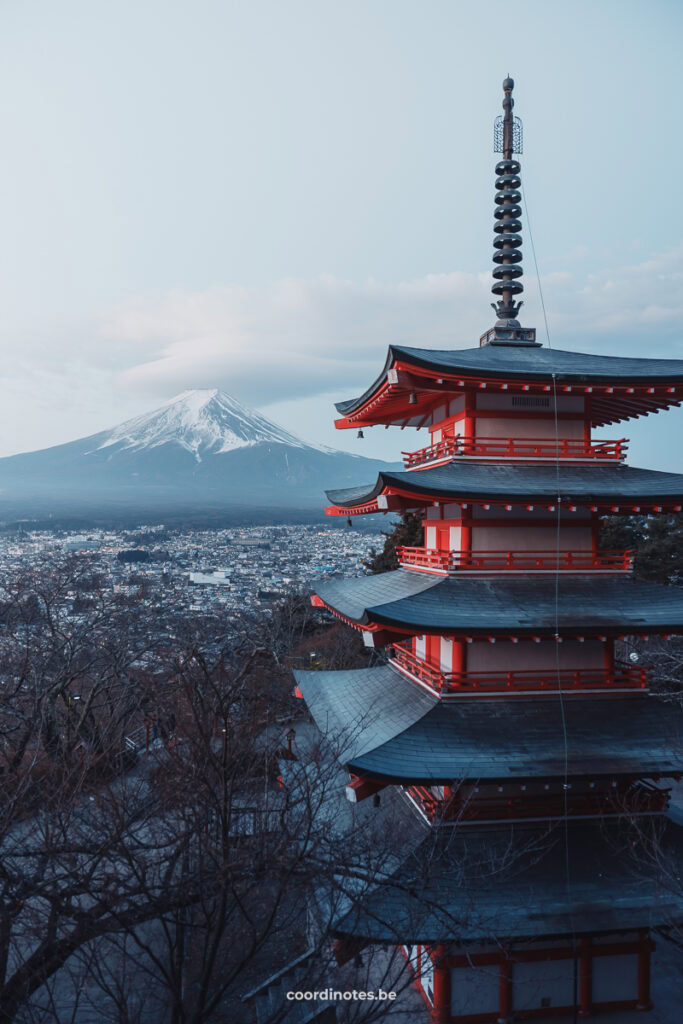
Chureito Pagoda
Lake Yamanakako
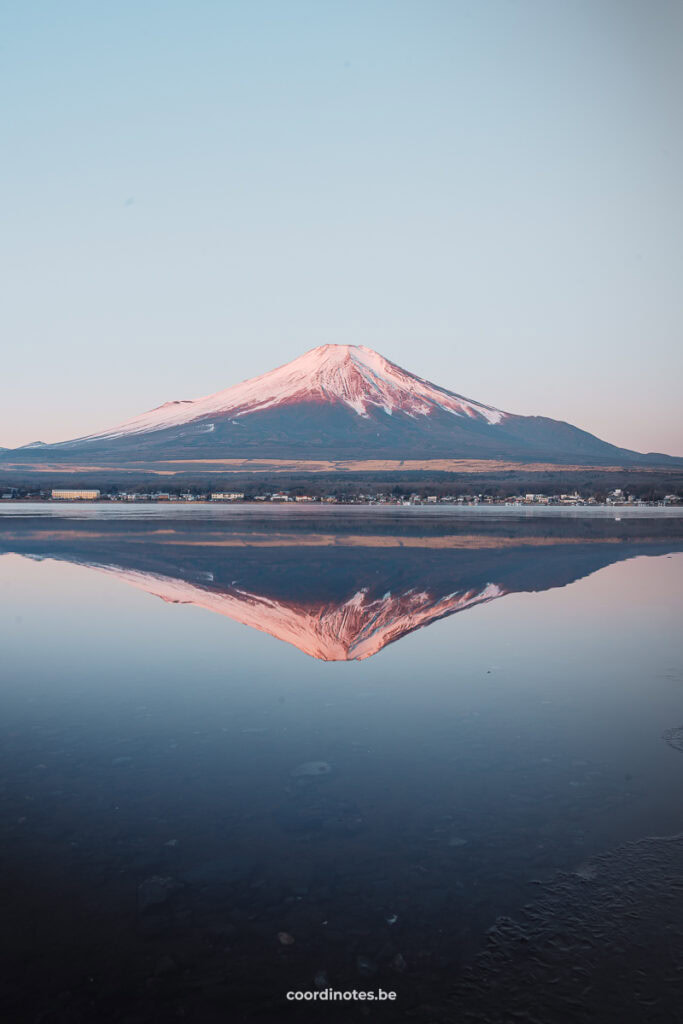
Lake Yamanakako is the closest of the Fuji Five Lakes and offers perfect views, especially at sunrise. On calm days, you find some of the best reflections of Mount Fuji here. It is a peaceful spot, perfect for relaxing by the water while watching the white swans floating on the lake.

Bonus tip: Stop by Café The Park for some delicious fluffy pancakes while enjoying an incredible view of Mount Fuji.

Honcho Street


Lake Kawaguchi
Lake Kawaguchi is a fantastic place to see Mount Fuji, with plenty of great viewing spots around the lake. It’s easily accessible and one of the most popular locations for Fuji viewing.
A boat ride on the lake gives you a unique perspective, and on calm days, you can see a perfect mirror reflection of Mount Fuji on the water. For the ultimate experience, book a hotel in this lake area with a Fuji-facing onsen and soak in the view.

Kenku-no Torii Gate
For a more spiritual and unique perspective, head up to Kenku no-Torii Gate. This traditional torii gate perfectly frames Mount Fuji in the background, creating a stunning composition for photos. This spot is less popular and therefore quieter compared to the more famous Mount Fuji viewpoints.
Note: The Kenku-no Torii Gate has an entrance fee of 100 JPY per person and you can only pay in cash.

Tips for visiting Mt. Fuji
The earlier, the better
Clouds tend to form as the day progresses, so aim to arrive at your viewing spot before sunrise for the best chance at a clear view.
Check the weather
Don’t rely on luck. Monitor weather forecasts, visibility predictions and live webcams before heading out.
Be flexible
If possible, have a backup day in your itinerary in case the weather does not cooperate and hope for a clearer day.
Layer up in winter
If you visit during winter - aka the best time for clear views - be prepared for cold temperatures, especially in the morning, even if other parts of Japan feel warm.
Stay overnight with a view
If possible, book a night at Mount Fuji. Staying overnight in areas like Fujikawaguchiko or Fujiyoshida increases your chances of catching a clear view of Mount Fuji, especially in the early morning. We stayed at Hana Hostel Fujisan and although we didn't have a view of Mount Fuji, we absolutely loved our stay because of the super kind hosts!

Seeing Mt Fuji from Tokyo
If you’re planning a city trip to Tokyo but not up for a day trip to Mount Fuji, you might still be able to see Japan’s most famous mountain on a clear day. Several spots around the city offer great views, especially from tall buildings and high observation decks. Tokyo Tower, Tokyo Skytree, Shibuya Sky, Tokyo Metropolitan Government Building, and Roppongi Hills Mori Tower all provide panoramic views over the city with Mount Fuji in the distance.

Win-Win for everyone
Did you know that, if you buy or book something through our links, we receive a small commission?
However, you still pay the same and therefore have no extra costs! So a win-win for everyone. This way, we can continue to add even more travel inspiration and tips to this blog for your next adventure. Thanks a lot!
Thank you for visiting our blog
We hope you find our free travel guides and tips useful. If you want, you can support us virtually by ‘buying us a coffee‘.
Every contribution, no matter how small, is greatly appreciated and will help us continue to share our passion with you and grow this blog.
Win-Win for everyone
Did you know that, if you buy or book something through our links, we receive a small commission?
However, you still pay the same and therefore have no extra costs! So a win-win for everyone. This way, we can continue to add even more travel inspiration and tips to this blog for your next adventure. Thanks a lot!